Nature

What is it?


Use your smartphone to identify plants and animals.

Nature Preserve

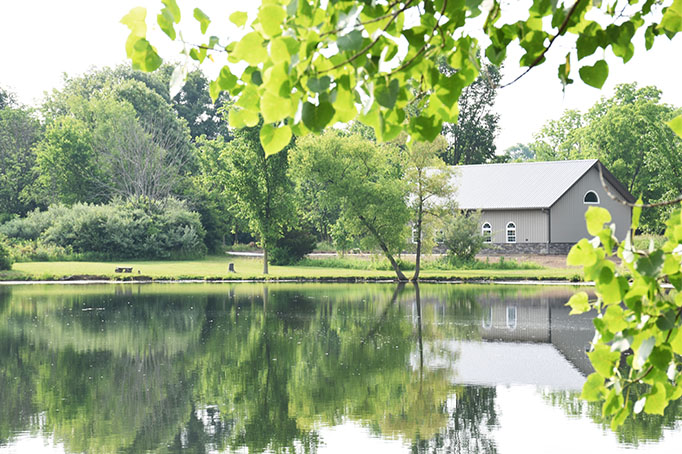
The Bluffton University Nature Preserve, has long been a place for appreciating the natural world and for learning.

Located at the northwest edge of campus, the preserve’s 160 acres is home to woodland and grassland trails, a riverine ecosystem and a small lake wildlife habitat. 

Nature PreserveStudents visit the preserve for various reasons from academics to student life activities. You may find yourself there for events during Fall Welcome Week, Spiritual Life Week or for a 60 in 6 activity. Students, faculty and staff visit for picnics, jogging and walking, for classes and more. 

The nature preserve is open during daylight hours. People using the preserve must stay on mowed trails. Current students may use the pond for water sports and catch and release fishing. Pick up a map and guidelines for the preserve at Marbeck Center desk. 


habitat restoration Project

Bush HoneysuckleTo support biodiversity, invasive shrubs will be selectively removed to promote the growth of native plants. You may notice shrubs that have been cut down or stems have died back. These are invasive plants which were targeted for removal. The dead plant material is left to decay in place to reduce disturbance, build soil humus and contribute to natural nutrient cycles.  Photo from Invasive.Org  

“Ecological restoration is the process of assisting the recovery of vegetation that has been degraded or destroyed in order to restore the health and integrity of the system.”
— The Nature Conservancy

TALLGRASS PRAIRIE RESTORATION at the Preserve

Before the arrival of Europeans, the field pictured above was likely covered by forest, with dominant species including American beech, maples, elms, ashes, oaks and hickories. In the late 19th or early 20th century, this field was cleared for agriculture, and cultivation continued through much of the 20th century.

Mid-century, it was converted to grazing land for livestock, featuring non-native grasses like smooth brome, timothy, orchard grass, Kentucky bluegrass and tall fescue. Additional species have since made their way into this field, including natives like bergamot, ironweed, American senna, milkweeds, hemp dogbane, goldenrods and New England aster.

Through occasional mowing and haying, it remained a grassland until 2024; the starting year of this restoration project.

We are restoring this hay field into a native tallgrass prairie. Tallgrass prairies feature a diverse mixture of grasses and broadleaf herbs (forbs). The dominant grasses include big bluestem, little bluestem, golden feather grass and switchgrass. The dominant forbs include sunflowers, asters, goldenrods, coneflowers, prairie clovers, ironweeds and bergamot. We aim to establish these species in this field.

The North American prairie began forming at the end of the Pleistocene glaciation, approximately 12,000 years ago. For the past several thousand years, the prairie represented the largest continuous ecosystem in North America. Prairies stretched north-to-south from Canada to Mexico, and east-to-west from Ohio to the Rocky Mountains, covering one third of the area now known as the continental United States. Over the 19th and 20th centuries, nearly all the prairies were plowed and converted to agriculture and pasture. At present, less than 1 percent of the original prairie remains intact.  

Prairies offer a number of ecosystem services that are beneficial to wildlife and humans alike. We hope to restore these ecosystem services in this site.

  • Prairies support a diversity of animals. These include insects (pollinators, herbivores and insectivores), birds, mammals, lizards, amphibians. Prairies offer food, shelter, nesting sites and breeding grounds for these animals.
  • Prairies create deep, fertile soils. Perennial prairie plants form surprisingly deep roots, reaching 10 feet or more below ground. When these roots die and decompose, as much of them do every year, they release organic matter into the soil.
  • Prairies store carbon. Plants consume carbon dioxide to grow their bodies, including their deep roots. When those roots die, they store that carbon deep below ground.
  • Prairies capture rainfall. Plant roots loosen and aerate the soil as they grow, reducing compaction and increasing pore spaces that water can drain through. This reduces surface runoff, moderates flooding and recharges groundwater supplies.
  • Prairies filter water. As water drains through the prairie soils, suspended sediments, microorganisms and chemical impurities like agricultural fertilizers, are removed.
  • Prairies are beautiful. They provide a sense of place where people can connect emotionally and spiritually with the natural world.

The non-native grasses that have dominated this field are difficult to displace. They aggressively spread by rhizomes, they shade native seedlings with their dense growth forms, and they have a competitive advantage because they are already well-established. Therefore, we must do our due diligence to eliminate these grasses and shift the competitive advantage toward native prairie plants. 

The first step is to kill these non-native grasses. To accomplish this, the best practices in the field of ecological restoration include mowing, tilling, spraying herbicide, burning and intensive grazing. We have chosen to use a combination of tilling and herbicide to eliminate these grasses. 

Rather than leave a barren brown field, we have opted to cultivate this site following the removal of the existing vegetation. This will reduce soil erosion (by stabilizing the soil with roots), while providing a source of income from the agricultural product.

In particular, we will be cultivating soybeans, which will have the added benefit of adding nitrogen into the soil, as legumes fix atmospheric nitrogen. Over the winter, a cover crop will reduce erosion as well. 

Following the two-year cultivation period, the site will be ready for seeding. We will use a seed mix containing dozens of species of native prairie plants. After seeding, occasionally mowing and spot treatments will be performed to help the perennial plants establish.

  • Spring 2024: Till, spray, plant soybeans
  • Fall 2024: Harvest soybeans, plant winter wheat
  • Spring 2025: Till, spray, plant soybeans
  • Fall 2025: Harvest soybeans, plant winter wheat
  • Spring 2026: Till, re-seed with native tallgrass prairie seed
  • Summer 2026 – Fall 2028: Mowing several times per growing season to establish native perennials The site will start to look like a prairie.
  • 2029 and on: The prairie will look established. Long term maintenance and monitoring.|

Below is a comprehensive list of collaborators, both past and present.

  • Dr. Jacob Buchanan: Assistant Professor of Environmental Science and M’Della Moon Endowed Chair in Botany and Environmental Science, Bluffton University
  • Dr. James Uphaus: Chair, Agriculture, Health Sciences and Public Service, Rhodes State College
  • Aaron Tabler: Student, Rhodes State College

Maintenance and management of habitats at Bluffton University Nature Preserve, is funded through grants and donations. This restoration project is funded by the Protect the Plant Grant from the Cenovus Foundation. Much work remains to be done at the nature preserve, and donations of any size, as well as volunteer support, are appreciated. To get involved or donate, call the Bluffton University Advancement Team at 419-358-3362.

To learn more about invasive plants and see photos of those listed here, visit the website of the Ohio Invasive Plants Council: https://www.oipc.info/

The work to remove invasive species is an on-going effort that will continue indefinitely.

Step one
The first phase of removing invasive plants targets along Augsberger Road near the preserve entrance began in summer 2023. On the west side of the lane, we are restoring an Oak Woodland, which, after removal, will be characterized by widely spaced oaks with an open, park-like understory. There are several oaks of various species already growing in this area, and removing the invasive shrubs will allow them to thrive.

Step two
A second restoration area is the East Woods. This is a mature forest with high diversity of native plants, and large, mature trees including oak, hickory, maple, and beech. The understory is rich with native species, but invasive shrubs have begun to encroach, especially along the forest margins.

To help conserve the existing high-quality habitat, invasive shrubs will be removed to prevent further damage to the mature forest. Over the next 100 to 200 years, natural forest succession will proceed and allow for transition from an oak-hickory dominated forest to a beech-maple forest, which is characteristic of historical northwest Ohio forests.

Step three
A third restoration area is along both sides of the road through the center of the preserve plus the forested area north and east of the pond. These woods are relatively young. They occupy land which was completely cleared and then cultivated until about 1967; the year the pond was constructed.

Within the span of several years, trees were sparsely planted throughout the area. Natural succession has since transformed these areas into young forests. At present, common tree species include black walnut, maples, oaks, pines, mulberries, cottonwood, willows and honey locust. Some areas feature a high proportion of well-established invasive shrubs, notably autumn olive and bush honeysuckles. The high density of native grape vines also poses a risk to the taller desirable tree species.

Step four
A fourth restoration area is the northwesternmost part of the nature preserve, along Bixel Road. This area includes some of the oldest, most well-developed woods within the preserve, featuring a high proportion of American beech, with sugar maple, hickories, oaks, American hophornbeam, honey locust, black walnut and basswood also well-represented.

Beech-maple forest is the dominant pre-settlement late-successional forest cover type in our region. The northern portion of these woods are the most heavily invaded. The species to be removed are privet and bush honeysuckles. Some aggressive natives, grape vines and American hophornbeam, will be thinned, allowing more desirable species to thrive in their place.

After removing the dense undergrowth of invasive shrubs in these areas, we will plant native trees, shrubs and wildflowers. This will replace the invasive species with natives to help protect these ecosystems from future invasion. Native tree plantings will include oaks, American elm, American beech, ashes, butternut walnut, maples and pines. Native shrub plantings will include viburnums, dogwoods, American hazelnut, buttonbush, chokeberry, black elderberry and sumac.


Moyer Nature Center 

Nature PreserveThe Moyer Nature Center, completed in summer 2018, was the vision of Harriet (Burkhart ’52) Moyer. It is intended to enhance science and recreational education by providing a place for field study in botany and environmental sciences, recreational leadership programming, and public education about the natural environment and sustainability. 

The center is located between the Nature Preserve pond and parking area. It is supported by municipal water and contains fully-accessible restroom facilities. 

Current students are able to borrow fishing equipment, paddleboards, kayaks and canoes for recreational use. 

  • Equipment may be signed out at the Marbeck Center Desk with the submission of a release form.
  • If a thunderstorm with lightening occurs during a watersport activity, all boats, craft and people need to come off the water immediately.
  • Return fishing equipment, canoes, kayaks, paddleboards, paddles and dry life jackets to their original locations in the storage building. Wet life jackets should be placed in the designated drying area.
  • Lock the storage area during your activity period and after equipment has been returned. Keys should be immediately returned to Marbeck front desk. Report any lost or damaged equipment to Marbeck front desk.
  • Life jackets MUST be worn at all times while you are on the water.
  • Fishing is strictly catch and release.

If you are planning to participate in watersport activities – we ask you to bring a buddy to the preserve with you. Whistles are for use in case of an emergency to signal to your buddy you need assistance.

Pick up a map, guidelines or key for the shed to access watercraft and fishing equipment at the Marbeck Center Information Desk.


The Swinging Bridge 

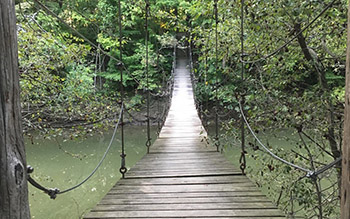
swinging bridge-Nature PreserveA popular destination in the nature preserve is the Swinging Bridge. Located near the Bixel Road entrance of the preserve, the bridge spans Riley Creek. It’s about 40 steps across, and the trip across has just enough bounce to warrant the name “swinging.” The location of the bridge is unique because of daily changes in scenery color and water level, and each season paints it’s own beauty. 


Cross Country route
Cross country
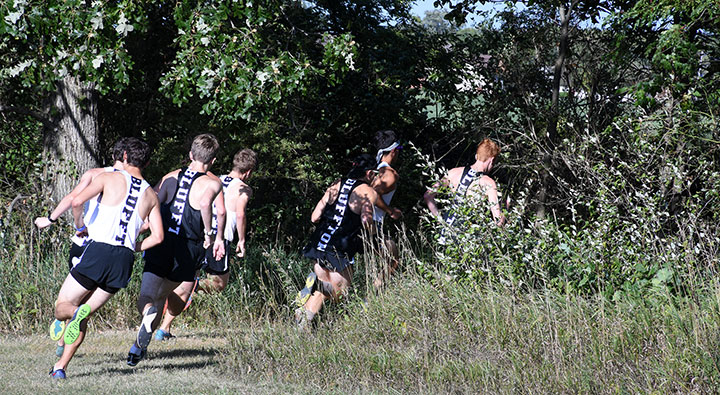
Runners wind their way through the Bluffton University Nature Preserve during the annual Beaver Dam Invite.


History 
History of the nature preserve

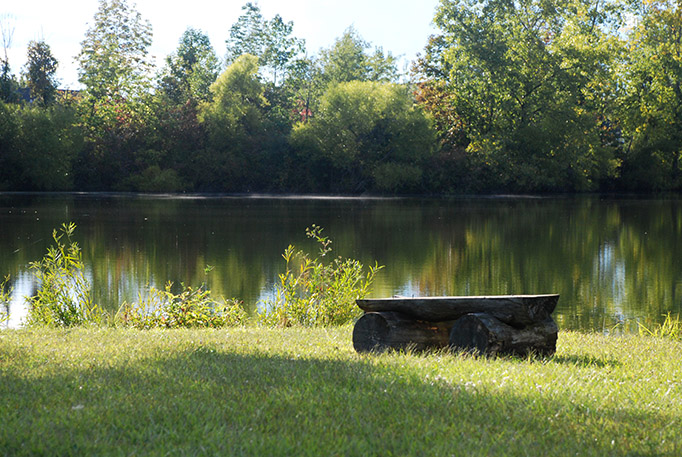
Robert Kreider, Bluffton’s fifth president, initiated and developed the concept of the preserve. The 160 acres were originally given to Bluffton by the Thutt family for use as a college farm. Students helped farm and harvest the land during the 1920s, and during the 1930s food grown on the land helped feed faculty and students during the Great Depression. The land was then rented out to local farmers in the 1950s to earn income for the college. In 1966, Robert Kreider came up with the idea to convert the farm into a permanent nature center and outdoor education site.

 
Top